
Daily
January 1, 2023 · canan · 4 views
Panta Rhei
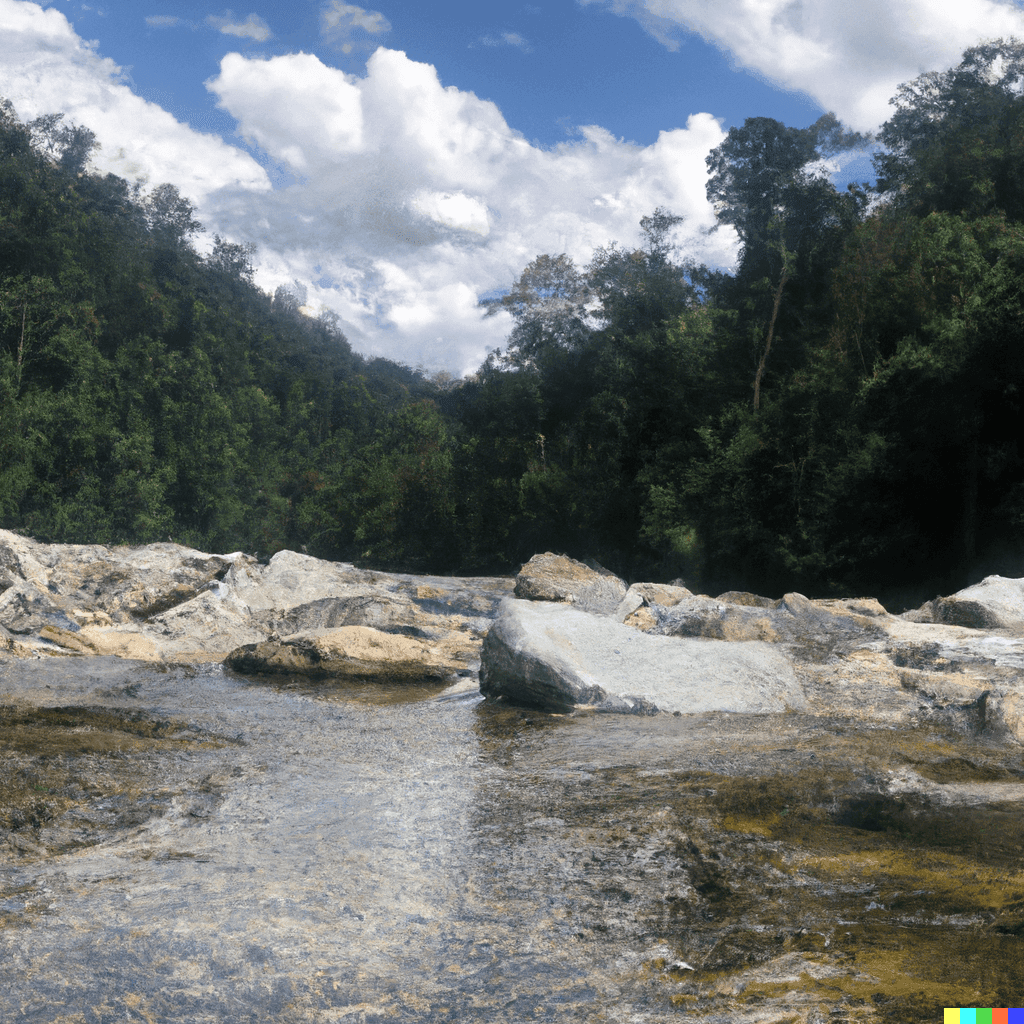
In recent years, I have become consumed by doubt. I have constantly questioned life, death, falsehood, truth, wisdom, and superstition. I reached out to human beings and my hands were burned; I took refuge in knowledge and my mind grew weary. The more tangled things became, the more confused I felt. I drifted back and forth between believing in something and believing in nothing at all. I loved knowledge; yet the more I learned, the more I saw my own lack, realising I knew absolutely nothing. With my emotions, my memories, my lived experiences, and all my questions, I simply carried on flowing through life.
I built dreams. Some I fulfilled, others remained out of reach. On certain nights, I gazed at the stars, wandering through the sky during hours when no one else was around; there were times I leaned against a heavy cloud and rained down upon the earth, and times I wrapped myself in sorrow and wept... In a world where wisdom and falsehood are tangled together, where everyone claims to know everything and genuine labour goes unseen, what else can those without dreams possibly take refuge in? I loved my dreams as much as the hope of beginning each new day.
Just as I had dreams, I endured many disappointments too. Everything happens for a reason; I learned this as I lived. Everything flows; those who departed did not leave in vain, and those who arrived did not come without purpose. Everything and everyone was bound to flow within a singular current, that was all.
I championed speaking freely. I realised that candour and thoughtless rudeness are by no means the same thing. I looked into mirrors, practiced self-criticism, and chose confrontation to heal my inner self. When the very thing a person flees from their entire life is themselves, I saw how immensely difficult that confrontation truly is. I didn't concern myself much with the exterior. For me, the real matter was always what lay within. The more I observed the depths of human nature, the more frightened I became, yet I couldn't run away. For I had once believed, down to my core, that human beings are meant to be a remedy for one another.
"Music soothes the pain." I wrapped myself in music. I bound my wounds with my instrument. I articulated the sorrows of the world through my songs. I documented the dark eras. I had set out on my path with this exact philosophy. I never forgot where I began.
I composed music for poems. I held poets deeply dear. I kept companion poems by my bedside, spending days where I wouldn't sleep without reading them. While flowing through life, I believed that the force healing me ought to touch others as well. For this reason, I never stopped mingling with people. I felt at peace on rainy days; once my sorrow ceased to cause acute pain, I grew fond of it too. I kept my sorrow strictly to myself.
I had successes and failures. I never liked that word at all. I never complained to anyone. Even when I occasionally blamed people, I quickly shook off those thoughts, learning early on that living a life of blame within this flow does a person no good. I practically never uttered the words 'if only' or 'regret'. I simply considered that I had added one more chapter to my life history, which is filled with errors. Seeing lives devoid of any narrative made me appreciate my own stories even more. I woke up when a friend remarked, "look how many stories you carry."
I steered clear of televisions that lie to a person while staring straight into their eyes. Then I observed that this sickness had infected people too; lying to our faces and feeling no shame whatsoever while doing so had become easy. This intrusion of superficial, deceitful people into our lives turned out to be one of the worst aspects of social media.
What exactly did Shakespeare mean when he wrote "To be or not to be"? Was it really that easy 'to be'? Or did we ever truly become anything at all? Did becoming something at the tap of a button, or getting lost inside copied-and-pasted lives, make us who we are? Tell me, what did it truly mean to be or not to be?
Everything now depends on a single keystroke; life flows through those buttons. As people drift away from nature and authenticity, they take refuge in superficiality; the more isolated they grow, the more they focus on the exterior. Perhaps, to avoid seeing the surrounding darkness, they consume with a frantic frenzy. Faces resemble one another. Expressions are identical. Is it really possible to claim that all this artificiality, living for the sake of others, and leaning toward the exterior rather than the interior can do a person any good? Is the rise in mental distress tied to social class as well?
Heraclitus stated over two thousand years ago that everything flows, that we find life within another living organism after death, and that nothing ever truly ends. Just as the elements of fire, water, and air sustain existence by touching one another, human beings—even when locked in contradictions—manage to survive by interacting, for better or worse. The good carry on being good, and the malicious carry on being malicious.
Life flowed long before us, and it will carry on flowing long after we depart. Every living creature will undoubtedly taste death, yet whether we merge into other lives remains a mystery. To tell you the truth, I love life so deeply precisely because I know it will end one day; I don't know what I would do if living face-to-face with all this malice carried on forever without an end.
In short, in an era where knowledge, affection, and thought flow and shift with terrifying speed, it is still possible to live without deceit, hypocrisy, or malice, avoiding degradation, and staying far away from artificiality and imitation. Even if deceitful people, wickedness, and ugliness knock at our doors, if we can carry on remaining human despite everything, living with basic dignity—that is where the true mastery lies.
Comments
No comments yet. Be the first to comment.