
Music
June 29, 2022 · canan · 5 views
First Summer, Then The Four Seasons of Vivaldi
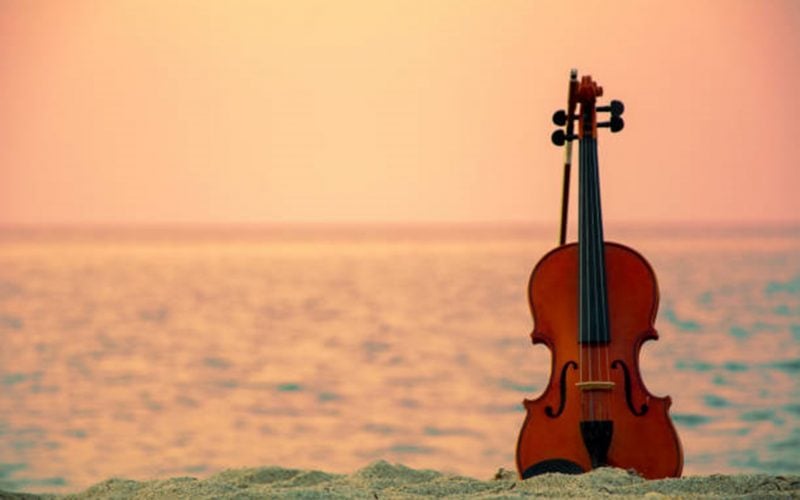
The Four Seasons by Antonio Vivaldi, one of the most significant composers of the Baroque era, stands as one of my most cherished pieces of music. Born in Venice, Italy, the composer's work has held its place in the hearts of humanity for centuries, and nowadays, it is frequently utilized across the worlds of advertising, television, and cinema. Composed in the 1720s, The Four Seasons was first published with its sheet music in Amsterdam in 1725, and it has never grown old from that day to this.
Vivaldi is recognised as one of the true geniuses of music, and his pioneering work in composition influenced numerous composers across Europe. Having penned over five hundred concertos, the maestro’s most renowned and deeply loved composition is undoubtedly The Four Seasons, listened to millions of times. Although his works were celebrated during his lifetime, they fell into relative obscurity after his death. Fortunately, this trajectory shifted in the twentieth century when his repertoire was rediscovered. In truth, nothing that is genuinely fine ever dies.
To begin with, a concerto is a musical composition written for a solo instrument or instruments accompanied by an orchestra. While we observe that most concertos are scored either for the violin or the piano, concertos exist for every imaginable instrument. The Four Seasons was composed for the violin. Vivaldi was a man deeply in love with his instrument.
If you can daydream while listening to a piece of music, it reveals the sheer potency and success of that arrangement. Vivaldi’s The Four Seasons achieves precisely that. Vivaldi structured all four concertos of The Four Seasons by meticulously studying their emotional modes. "Spring" reflects the brilliance of E major, "Summer" the pleasant melancholy of G minor, "Autumn" the twilight of F major, and "Winter" the bleak desolation of F minor. It is perhaps because of this exact nuance that our imagination is stirred when we listen to The Four Seasons.
It is said that The Four Seasons was born out of composing music for four distinct sonnets. Those unaware of these sonnets can simply lose themselves in the beauty of the music, dreaming whatever dream they desire. For those familiar with the verses, however, a narrative unfolds, and they visualise that story as they listen. Although the authorship of these sonnets remains unverified, historians suspect that Vivaldi may have penned them himself.
Vivaldi divides each concerto into three movements, following the traditional structure utilized for most concertos: fast (Allegro), slow, fast, illustrating each season through transitions between major and minor scales. Comprising four distinct violin concertos, every single movement of this work holds its own unique spell over the listener.
"Spring" is a three-movement solo concerto: fast-slow-fast. The first movement mirrors the chirping of birds and a sudden spring storm; the second portrays a goatherd sleeping alongside his faithful hound, and the third unfolds as a pastoral spring dance. The ritornello (meaning a short return, a recurring refrain) featured in this section celebrates the arrival of spring through its vibrant melody and rhythm.
The "Summer" concerto evokes a sense of pure tranquil peace, stillness, and the sheer languor of sweltering summer days. As Pincherle noted, both the Summer and Winter concertos contained musical portraits of storms. At the same time, it symbolises the stifling heat of the summer season, followed by a sudden breeze taking over the heat, while birds offer their calls. Here, too, a shepherd's tale unfolds.
This concerto is set in the scale of G minor. Consequently, it is entirely possible to feel the dramatic impact characteristic of minor scales. And this scale acts as a harbinger that the gentle breeze is about to transform into a violent storm. The shepherd in the narrative grows anxious. The second movement of Summer begins slowly, yet as the shepherd observes the approaching tempest, the music gains speed. The orchestra mimics both the rumbling storm and the buzzing of insects. The final movement is frantic, anxious, and highly dramatic. At this juncture, the orchestra mirrors the storm, thunder, wind, hail, and the sheer terror of the shepherd.
L’autunno, or "Autumn", echoes "Spring" in its opening movements with parallel musical motifs. The country folk rejoice once more, celebrating the harvest by drinking wine. Parallel to the peaceful slumber that envelops the revelers, the tempo drops rapidly. This movement utilizes a ritornello theme. It stands as a solo concerto, a piece written specifically for the soloist, where the condensed sections are accompanied by an orchestra. Due to the smaller size of ensembles during the Baroque era, these parts were scored for an orchestra of just six instrumentalists.
The final concerto, "Winter", remains my absolute favourite. It comprises three movements scored for a string orchestra and a solo violin. The first movement can easily be likened to a blinding blizzard. Vivaldi presents "Winter" through the sounds of biting cold, harsh winds, freezing bodies, and chattering teeth. The opening notes depict the gradual descent of snowflakes. The second movement is entitled "Rain". Here, it speaks of a contented man welcoming the cold winter from the safety and warmth of a blazing hearth, watching the raindrops pelt against the windowpane. The third movement opens with a violin solo; the orchestra mimics the gradually building and steadily intensifying wind, culminating in a winter storm toward the finale. Vivaldi concludes this magnificent work by showing: "this is winter, yet it too possesses wonderful beauties."
According to musicologist Massimo Ossi, several factors contribute to the immense success of The Four Seasons. First and foremost is its aesthetic clarity: "The truth is that [Vivaldi’s] writing is exceptionally transparent, possessing relatively simple textures... and is truly harmonious," he explains. The aesthetic and harmony within this masterpiece have been touching our lives for centuries, opening entirely fresh doors to the language of the seasons every single time we listen.
Comments
No comments yet. Be the first to comment.