
Music
June 7, 2022 · canan · 9 views
Singing is a Social Act
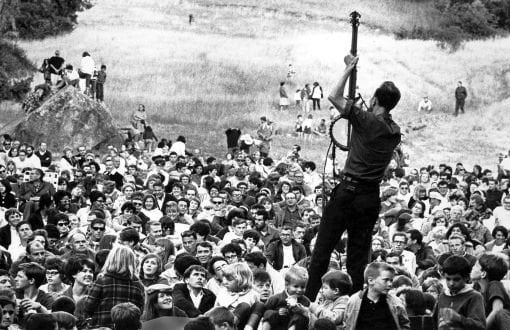
Why do human beings sing? What do they feel when they sing? What relevance do the lyrics have to this sentiment? Unquestionably, when we sing, we leave an impact on others, we form empathetic bonds, and we engage in a powerful act by socialising. Singing takes its place within the performing arts. What is the impact of the act of singing, as a performance, upon the audience? Perhaps life itself is a performance. In today’s world—influenced by social media—we live every day to 'present' ourselves; from the clothes we don to the actions we take. Well, while presenting, are we forming individual or social connections? Whichever angle we view it from, the performing arts both influence the human being and foster connections; it is both. At this juncture, singing emerges as one of the greatest acts of performance.
As a social entity, a human being lives in a state of social interaction and forms connections within their actions in daily life. Singing is one of the most potent forms of bonding in existence. While singing, we lay bare our personality and identity, reveal our character, and manifest a stance. Moreover, our vocal timbre also possesses a character (soprano, alto, tenor, etc.), each presenting a distinct harmony. And, without a doubt, we are in a conversation with music, from high pitches to deep, bass tones—whichever happens to speak to each of us.
Why does the word "performance" only trigger thoughts of concert halls? Yet performance carries on within every sphere of life. That is to say, "The Show" goes on. The Canadian anthropologist Erving Goofman notes that while moving within society, just as an actor portrays a character, even our slightest movement exists to influence others (Goofman 1969).
Songs themselves create an act similar to speaking. For instance, the song "We Shall Overcome," popularised by Pete Seeger... this song first appeared in the early twentieth century as a hymn entitled "I'll Overcome" or "I'll be Alright." In this form, it was sung in many African American religious rites in the United States. Later, in 1945, many black female tobacco workers went on strike in Charleston, South Carolina. They sang a revitalised version of this song to boost their morale and kindle enthusiasm. For this song was renewed as the years went by, embracing the evolving societal transformations.
In 1950, Seeger taught this song to Frank Hamilton and Guy Carawan. Thus, the song found its place in black communities and the human rights movement in its revitalised form. Later, "We Shall Overcome" also became the anthem for African American human rights movements and the anti-apartheid movement against racism in South Africa. It was translated into many languages and sung by the peoples of many nations. Regarding this song, Seeger wrote: "A song is not a speech. It is art. As life casts new light upon it, it gains new meanings. This song undoubtedly has many meanings for many people" (Seeger, 1972, p. 112).
Similarly, the song "Strange Fruit," performed by Billie Holiday and written by Alen Meeropol, a Jewish communist teacher, was utilised in various forms as a social protest. This song narrated the racist discrimination and persecution endured by African Americans. Although slavery was supposedly abolished after the Civil War, violence against African Americans remained rampant. Meeropol penned these lyrics upon seeing a photograph of two black men hanging after being lynched, their bodies swaying in the wind, "resembling fruit and leaves splattered with blood on the trees." As Lynskey noted, "Protest songs functioned as propaganda; 'Strange Fruit' proved that such songs could also be art."
The truth is, Blues was born at its root from the screams erupting from the shackled feet of humanity. People articulated their deepest agonies in these songs. Sometimes they danced, sometimes they were overwhelmed by tears. Although people today shy away from feeling 'agony', wasn't the very thing that makes us most human our capacity to feel pain, or even more so, to feel the pain of another? These songs, which gave a voice to conscious suffering, were, at this precise juncture, the witnesses of suffering peoples.
In this context, the song "Bella Ciao," first written in Italy, was sung by workers toiling in dire conditions in rice paddies. This melody (or march, if you will) was translated into many languages and claimed its place on the tongues of the public in social protests. The destination of all these songs is identical: to recount inequality and injustice, and at the same time, to gather people for a better, more liveable world.
In music, the 'protest' form possesses a rich history that spans all genres. Most of the greatest songs of the last century—examples of which I provided above—were, through their lyrics, opposed to injustice, oppression, exploitation, racism, inequality, and war. Songs existed and will always exist to remind people that they do not have to face their hardships entirely alone. The universal power of these songs will influence people through words and spur them into action.
Comments
No comments yet. Be the first to comment.