
Music
May 4, 2022 · canan · 4 views
Music from Baroque to Classical
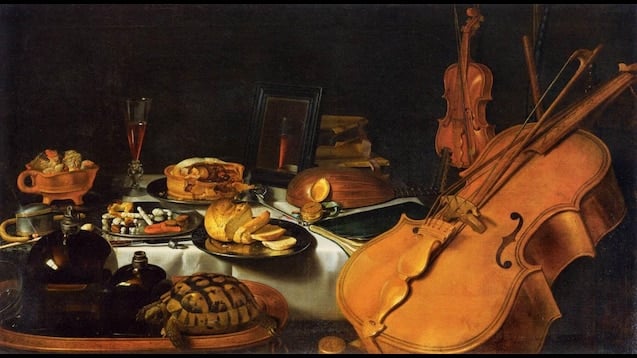
An era or a historical period is usually defined by dates, yet because change and transformation often progress more slowly than observed or recorded, defining and understanding them tangibly can be difficult. This holds true for musical history and genres as well. Identifying the specific periods of Western classical compositions is particularly challenging; though we might be familiar with the melodies written during the Baroque, Classical, Renaissance, or twentieth-century eras, very few people can pinpoint their exact genre or name. So, if a curiosity awakens within us, how are we to know the era in which these works were composed? Is it Baroque, Classical, or older still? In truth, it is entirely possible to know and understand. For those who love Western classical music, recognizing and comprehending the pieces they listen to requires going beyond being a mere listener; it demands examining the works and researching the composers. Even if the music we hear seems to resemble one another, there are distinct characteristics that separate pieces according to their era. In this piece, I will touch upon the transition from the Baroque to the Classical period, and look at how we can identify these styles.
We cannot comprehend any musical genre without looking at its historical context. This is why Baroque music shares striking similarities with the architecture of the Baroque era. For instance, the pilgrimage church of Wallfahrtskirche in Birnau, Germany, built between 1746 and 1759, belongs to the exact same period in which Bach created his Goldberg Variations. The defining features indicating that this architecture belongs to the Baroque period are the sculpted statues, elaborately detailed walls, and ceiling paintings. The ornaments we observe in architecture appear in Bach's works as well. For the Baroque era describes a period filled with ornamentation. We can find these embellishments throughout Bach's compositions. At the same time, although Bach’s works often progress in what is known as "binary" form—comprising two sections where both are repeated—the decorative details in the melody and the chromatic tunings stand out as core traits of this era. At this juncture, alongside Bach, we must mention the significance of the Italian-born composer Domenico Scarlatti, who composed no fewer than 555 sonatas between the late Baroque and the early Classical period. Scarlatti lived through both of these eras. The sonatas he penned—particularly those composed after 1745—were written in two parts, utilizing that same binary structure. Today, compositions by both masters are performed on the piano, violin, guitar, and many other instruments. They greet us wherever Western classical music is found.
The use of the term Baroque to define the music of the years 1600 to 1750 indicates that historians believe the qualities of this music resemble, in certain aspects, the contemporary developments in architecture, painting, literature, and perhaps even science and philosophy. We can see this connection not only in the Baroque period but across all eras. The transition from Baroque to Classical music undoubtedly spanned decades, much like the transition from the Renaissance to the Baroque took centuries to fully unfold. Alongside social shifts, artistic transformations occurred. The Baroque era witnessed major political developments. The hierarchical structures of medieval feudalism were gradually transformed into civil society frameworks. In the West, this shift was linked to the "doctrine of the affections"—an idea centred on evoking specific, unified emotional states. The emotional affect referred to here was not so much the personal feelings of the composer, but rather a representation of universal human emotions.
These compositions were crafted not through emotion alone, but through deep knowledge. There existed a triad of virtue, knowledge, and happiness; since ancient times, virtue remained incomplete where knowledge was absent. It is like trying to walk before you can crawl, or run before you take a step. At this point, let us recall the words of the Greek philosopher Diogenes: "One sees people striving to outdo each other in completely trivial matters, yet no one seems to endeavour to surpass others on the path of virtue." Clearly, humanity's fundamental problems have remained similar since ancient times. One must not set out on an artistic path without understanding that ideas cannot exist without knowledge, and without realising that the true beauty of art reveals itself only through wisdom.
Whatever the era in which music is produced, it takes shape according to the nature of that time. The world changes with every age; though the content of music shifts, its fundamental language remains the same. It takes from the past and adds to the new, drawing inspiration from what came before. Is everything, then, in constant interaction? The notes, humans, animals, nature... Did composers influence one another too? Even if they did, there was an authenticity to the old days. Because there was no copying and pasting at a keyboard. No keyboard warrior culture! There was a human being forming, arriving into their own. This required time; working for days and months, locking oneself away in a room; learning, knowing, reflecting, and only then producing. Art was made to nurture beauty, completely detached from the anxiety of chasing fame. Yet, as in every age, there were certainly those who succumbed to their darker traits; those who grew ugly and malicious, fading away into oblivion over time—much like Salieri spinning his intrigues against Mozart. In contrast, every era preserved that which was truly beautiful.
Let us return to our subject. A common trait among Classical era composers was their effort to express, or more accurately, represent a broad spectrum of ideas and emotions. Alongside this, while operas, suites, and concertos were refined during the Baroque and Classical eras, the transition into the Classical period saw a move away from the rigid concept of music merely representing set emotional affects. Composers found the freedom to act individually. As music began to filter down from the elite classes to the wider public, rigid rules were discarded. Compositions grew longer. Mozart could write opera scenes lasting twenty minutes and symphonies spanning ten, because the strict constraints of the Baroque era were coming to an end. The power of the public was liberating music.
Is everything bound to social class? Can we ask this question in every space where we write and debate? I am inclined to think so. Indeed, with the rise of the middle class, popularity in art and education increased. New horizons began to open up for writers, artists, philosophers, literary figures, and scientists alike. As in all fields, music took its place within this wave of change and progress. Private concerts were opened to the public, creating audiences where different social classes mingled; such concert events multiplied in Paris, Vienna, and across Germany. Furthermore, the printing and publication of sheet music grew substantially.
Let us look at the composers who etched their names into these eras. The prominent masters of the eighteenth century were Haydn and Mozart, who represent the Classical period through their music. Bach and Handel embody the Baroque era. Bach is considered the culmination of the Baroque period. Classical music mostly consisted of homophonic compositions where simpler melodies blended with harmony; it possessed a lighter, clearer texture and was far less complex compared to the Baroque style. One of the striking differences between these major periods of Western classical music lay in this shift in creative thought.
One of the most significant developments of the Classical era was the composition of symphonies. These symphonies traditionally comprised four movements. However, there were always exceptions; while most symphonies shared a similar structure that audiences grew accustomed to, the dismantling of rigid musical rules meant these familiar patterns could vary from composer to composer, and from piece to piece. Even in the stages following the Classical era, composers frequently played with the forms they structured. The beauty of standardising forms is that they served as a fertile starting point for greater innovation. Following this, the new classical symphony paved the way for the development of an entirely fresh orchestral sound. The orchestral music we listen to and know today found its beginnings centuries ago during the Classical period.
Throughout the ages, composers wrote music with notes that filled countless pages, and the day came when these masters were branded as "musical geniuses". Making comparisons with our present day would undoubtedly be unfair; yet in an age where boundaries are imposed even on basic songwriting—let alone classical music—where no one listens to a track exceeding three minutes, and where everything moves according to statistics and consumer demand, so-called "creative artists" are completely oblivious to the concepts of emotional affect and true inspiration. Everything has become about numbers! Is it possible to form a bond with figures? Of course not! But a bond can be forged with a song, with a composition, provided it has been crafted far away from the anxieties mentioned above.
I do not know what a person can truly convey in three minutes. I accept that sometimes it is possible to express something in a single sentence, but most of the time, bareing your soul and your emotions does not happen that way. Though we live in the information age, all paths seem to lead to consumption rather than creative labour. I ponder our lives packed into three-minute songs on one hand, and on the other, the symphonies unfolding over hours of attentive silence, those magnificent stages. Tell me, where did those people disappear to—the ones who listened, who knew that listening itself was a form of joy? You might say that the music of every geography is different, and that diversity is beautiful; if so, does anyone remember how many stanzas Aşık Veysel’s folk song Kara Toprak had? Or the pages of verses penned by Yunus Emre? Perhaps this is why geniuses are no longer born. Speed is the only currency now; we carry on with slogans of 'live fast, consume fast', through lives compressed into narrow pockets of time.
I am inclined to think that all of this stems from things being too easily obtained, from knowing no real hardship; reaching millions through imagery instead of actual voice, or through plagiarism instead of true knowledge. And the final word always arrives at the same point: we are at the peak of the consumer age. Even if everything seems to flash and disappear, that which is authentic never truly fades; within this terrifying rush, like a star in the night sky, it continues to shine when its time comes.
Comments
No comments yet. Be the first to comment.