
Music
February 22, 2022 · canan · 4 views
The Flute of Populism
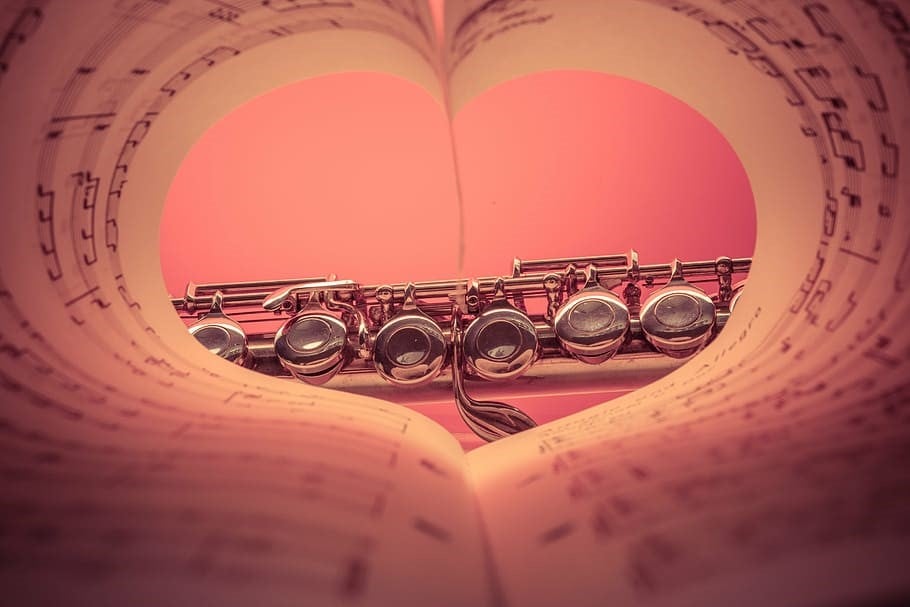
Music has travelled from prehistoric antiquity down to the present day, enduring profound transformations and developments along the way. We can find music woven into the fabric of every culture, old or new. When embarking on a journey into prehistoric times, is it truly possible to grasp where the boundless expansion that art and music have achieved today first began? Is dividing music strictly into categories like Western and Eastern a correct approach? While "great humanity" passed through infinite transformations across the ages, it was undoubtedly impossible for music to stand still. To comprehend this journey stretching from ancient eras to the twentieth century, we must first hear the resonance within history. We must ask: where did we come from, where are we heading, and where exactly have we landed?
Music was discovered first through rhythm; when a human accidentally struck a log with a stick, the resonance paired with an innate sense of pulse gave birth to percussion, allowing the inner stirring of humanity to break outward. Long before formal tools and instruments, humans utilized their hands and feet to maintain a beat; they had little alternative within the constraints of ancient times. At this juncture, the human voice also takes its place at the dawn of history as the primary instrument—meaning both converge at the very origin of mankind's relationship with music.
Historical texts record that humanity discovered every instrument purely by chance. Consequently, we possess an ocean of musical knowledge in this era, built entirely upon "coincidences". Even if Born of "chance", this resonance undoubtedly emerged from the heart of nature; from the trees, the insects, the waters, the mountains... was the primary reason humans couldn't resist pulse, then, due to an innate sense of motion within them? Is that why they perceived the potent voice of rhythm? Plato explains: "Music and rhythm find their way into the secret places of the soul." This is how he gives meaning to the discovery. How entirely right Plato was. Music was the inner voice of humanity.
Irrespective of ancient or modern history, every culture possesses its unique mode of communication through music. Eastern music is predominantly derived from the East and the Indian subcontinent, whereas Western music emerged first from Europe. Yet, it is impossible to separate music strictly into East and West, for from north to south, every geography yields its own music, and these sounds represent faiths, lineages, and communities. Let us descend, then, tens of thousands of years into the past, to the very opening pages of this history.
Around 60,000 BC, early humans began creating cave paintings, ornaments, and in all likelihood, music as well. Registered as the oldest known instruments, the flutes discovered in the Hohle Fels cave in Germany—crafted by boring holes into the wing bones of vultures—are said to date back thirty-five thousand years. This is how woodwind instruments first began to form. Though unverified, the oldest musical artifact is considered to be the Divje Babe flute, found in the Divje Babe archaeological park in Cerkno, Slovenia. This flute was fashioned from the femur of a cave bear. While some scientists believe the bone was deliberately reshaped to create a flute, others argue the perforations are merely the byproduct of carnivores gnawing on the bone. It is approximately forty-three thousand, five hundred years old.
Around 13,000 BC, as Siberian hunters migrated in groups to the Americas, they carried their traditional shamanic music and rituals along with them. Within Stone Age societies, music was by no means restricted to specialists. Although shamanic rituals could only be conducted by shamans, various events were held where the broader community could participate. Music was held in high regard during shamanic rites, and the shamans valued not only music, but dance, performance, and poetry as well. Art and life were intricately intertwined.
Around 6000 BC, the casting of copper, bronze, and metal began in Anatolia, and by 3000 BC, these metals were utilized to forge new instruments. Following this era, civilisations mingled across Mesopotamia, Egypt, and the Indus Valley, and priests and rulers began employing music for rituals and state ceremonies. In subsequent years, the Greek philosopher Pythagoras conducted studies on the mathematical ratios between musical notes and celestial bodies. Music emerged as the unfragmented language of the cosmos; a unifying and integrating force. Undoubtedly, this is why ancient Greek philosophers emphasized the absolute necessity of musical education to comprehend nature and the universe. Pythagoras termed his work combining music and mathematics "the music of the spheres"—interpreting that the sun, moon, and planets revolving in spherical orbits around the earth caused the cosmos to vibrate, giving birth to music through this resonance. For another Greek philosopher, Aristotle, music signified "educating, entertaining, or occupying the leisure hours of those at rest." As humanity and nature advanced, music took its place at the very forefront of this grandeur.
For over thousands of years, the world's oldest civilisations across Mesopotamia, Egypt, northern India, and China developed rich musical traditions. These traditions have become the premier representatives of cultures today, serving as the living, breathing history of ethnic lineages that were nearly forgotten. For example, the West African Griot—the singer and storyteller who passes the tribe's history and customs from generation to generation—survived into the modern era and carries on to this day. If we look at another geography, the roots of India's distinct musical tradition are believed to stretch back to the Indus Valley civilisation, which flourished from 2600 to 1900 BC. The ancient Chinese philosophers likewise believed that music mirrored the underlying order of the universe.
If we move closer to modern history, we encounter music categorized under headings representing specific eras: Ancient/Baroque, Classical, Contemporary/Modern, Postmodern, Renaissance, Romantic, and the twentieth century. Alongside all artistic fields, music gained immense strength and flourished with exuberance during the Baroque period (1600–1750) in particular. Whether penning sacred or secular works, composers aimed to evoke a powerful affect in the listener; thus, the melodies of opera and oratorio were born, and instrumental music gained independence, breaking away from vocal accompaniment and dance formats.
The liberation and boundary-breaking in music, from ancient eras to the Baroque, and from the Baroque to the twentieth century, proves its adaptation to the rapid marathon of production and consumption defining this age. The Baroque period had its rules. These constraints evolved slightly through the Classical and Romantic eras. The Age of Enlightenment witnessed a vortex of intellectual discourse and political revolution. Against this backdrop, the Classical period sought to dismantle the complexity of Baroque music and appeal to the rationality of a fresh generation. And so, music mingled with the public once more, separating from elite spheres and rigid constraints. For music belonged to social classes in the cities, but to the people in the villages. This shift helped democratise music through public concerts and increased the accessibility of sheet music; fresh forms such as the symphony, instrumental sonatas, and the string quartet were no longer financed exclusively under the patronage of the upper class, but were developed for a new middle-class audience by composers whose livelihood depended on the market.
Let us look at the era we live in. In the twentieth century, the constraints of past periods were entirely demolished. People could step before the public with a fresh style almost every single day, claiming to create music. In this era, when the vast majority, swayed by populism, began creating "Art" driven solely by the question of "whatever sells", the public gradually lost the ability to distinguish or choose between the fine and the uninspired. Melody and musical consciousness began to vanish. Within expanding technology and excessively fast-paced lifestyles, whatever appeared on screens was accepted by the public practically without question. To put it another way, it was forced into our eyes by mainstream media, and uncritical societies simply accepted it. Music became thoroughly degraded.
Nevertheless, let us recall two vital questions raised by Adorno: "What should music do?" and "What can music mean?" The finest answer to offer in this era is that music will carry on surviving and sustaining itself wherever there are ears to hear it, regardless of its form. Without distinguishing between the fine and the crude, societies will memorize any song that "sounds pleasing to the ear", embracing the melodies tightly. This is how it has progressed from ancient times to the postmodern era, and how it will carry on. Adorno defined the mission of music as "demanding change through the coded language of suffering." For Adorno viewed art as structurally embedded in life, which is why he fiercely criticised Western societies. Do you think he was wrong?
On the other hand, the ability of individuals and groups to create music through which they can truly express themselves remains one of the greatest factors required for healthy individuals and our social life. We can only unite in music as we achieve liberation. Indeed, in Europe, opera and classical concerts were artistic fields accessible exclusively to the upper class, attended solely by members of that sphere. The public possessed neither the means to purchase a ticket nor the opportunity to watch. Although we see this barrier dismantled in many cities across the world today, the class crisis of our contemporary world has by no means ended; it carries on. Furthermore, the music composed and performed in the sixteenth century and its aftermath was entirely free from the commercial anxieties defining music production today. Art was crafted for the sake of existence. This was true across Europe, Asia, Mesopotamia, and every corner of the globe.
The endless advancement of our era and the constant contemporary messages commanding us to "want more" are deliberate efforts designed to make us forget the past and discard our values. Yet, can a price tag ever be placed on the beauty of a blend that harmonises the old with the new? Cultural degradation occurs precisely like this among societies and individuals: through forgetting. Tell me, it is useful to note the exact definition of this frequently used word here: the literal meaning of degradation or degeneration is "subsequently losing the fine qualities inherent in one's nature or origin." Unquestionably, I am not discussing aristocracy or preserving a lineage here. I am speaking of an era losing its bearings as it discards its values.
Art is one of the most potent vehicles for forming a connection. If the language of art—the language of nature and life—the resonance within nature, had not integrated with the pulse within humanity, achieving the depth that music holds today would have been utterly impossible. As Balzac noted, "The mission of art is not to copy nature, but to express it"; humanity did not copy nature, it expressed it.
Music assists us in expressing our emotions in a manner entirely distinct from other artistic media. Experiencing affect, feeling, and the capacity to articulate them is precisely what makes us human. And as long as human emotions endure, music will remain an inseparable component of human existence. Regrettably, both fine and dark emotions reside together within humanity. Music likewise endures its share of this reality within this era. Just as we quickly forget everything else, scarcely anyone cares about music and this tens-of-thousands-of-years-old adventure anymore.
Music can do a multitude of things, from inciting wars to gathering millions in the name of peace; it holds an immense influence over communities and individuals throughout history. That a story beginning with a stick and a log has enveloped the globe may be a coincidence, or perhaps it is not. And who can argue that a single correct answer to this question exists? Music has stood as a core component of human life since ancient antiquity, and it will carry on doing so for practically the entirety of humanity's foreseeable future. Though history records it this way, it is impossible not to worry for tomorrow within this consumer age. Today, the number of people who perceive this is dwindling steadily; yet keeping this artistic field alive—which has expanded step by step from prehistoric eras to the present—depends not on populism, but on genuine labour. And only as long as the earth turns will works produced through honest labour survive. The rest will vanish into the murky waters of history.
Comments
No comments yet. Be the first to comment.