
May 10, 2021 · canan · 8 views
Words Versus Emojis
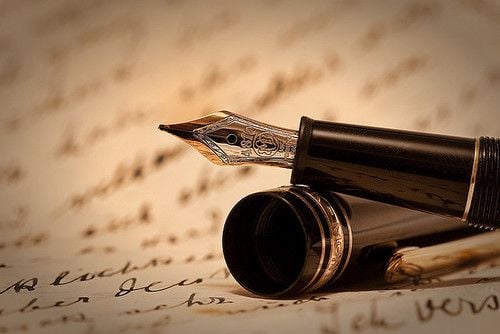
For some time now on social media, my attention has been caught by people who express their emotions beneath posts using nothing but emojis. Emojis are practically competing with words and sentences; in fact, abbreviated "sentences" made up of acronyms have completely enveloped the world of children and teenagers. Truth be told, this has been around for years, but it only recently caught my eye. The reason for this is plain and simple: the people I communicate with still use written language and treat their sentences with care. We live in a technological age. Agreed! Emojis can instantly reflect our feelings to the other side. Are we happy? Are we sad? We can debate whether we can truly express our emotions with a solitary emoji, yet it is a absolute certainty that emojis have become part of our daily routines, and that sentences will carry on shrinking day by day in the face of them.
The era is a technological one, and a human being has little choice but to live in harmony with it—though there are those, few as they may be, who live by rejecting it. Yet, how healthy is it for the human species, which is inherently social, to constantly use emojis without uttering a single word? Everything that is short, rapid, and immediate has become the preferred standard; care, value, and dedicating time have been degraded. Whereas in the past, even when writing a basic letter, we would choose our words mindfully and structure our sentences just so, even placing a high importance on the beauty of our handwriting. I suppose those days are long gone; emails have taken the place of letters, and emojis have taken the place of writing.
Speaking of letters... letters used to be written, sentences meticulously chosen, safeguarded for a lifetime inside pure white envelopes. Years later, they would be opened to honour old memories; emotions would soar at that moment, making lived experiences immortal. Lovers would write their feelings on the back of photographs, sentences beginning with "my dearest" and ending with "I love you". Nowadays, a solitary heart suffice instead of saying "I love you"—yet it is one of the most beautiful phrases ever spoken in this world, and it is vanishing amidst emojis. Lovers experience romance without speaking, and love itself is choking among emojis.
We are all social media users, spending a massive part of our day either posting or looking at what everyone else is up to; we watch, we are watched, and we live almost entirely to be liked. Throughout the journey between birth and death, a person—even if they rarely notice it—is constantly searching to satisfy a need for completeness, a void that can best be filled through education, art, and creation. In other words, it is currently unknown how "healthy" the mental and emotional state of people who spend their entire day tracking what others do, drifting further from themselves and from life, will remain over time. Alongside this, it is said that various psychological ailments are multiplying day by day. To the extent that the subject matter of most films and series produced in recent years revolves around people with psychological distress. I won't even mention the happiness formulas, wellness coaches, or self-help books. Furthermore, a "story" feature appeared on social media, meaning everyone is now living out a veritable "Big Brother" dynamic, glancing through everything without a single word or a mindfully structured sentence. Regrettably, we are drifting further from our true selves and from genuine socialising; we are enduring the most wretched forms of cultural degradation, and we aren't even aware of it.
Let us look at the history of emojis. That is well recorded. It was first invented in 1999 in Japan by a man named Kurita, who worked for the company DOCOMO. He created exactly 176 characters using six colours. There are those who think that one day we will be able to communicate with people speaking languages we do not know entirely through emojis, viewing this as a wonderful development. But what will become of the beauty of languages and literature? The immense effort required to master a language? Do you think these will vanish one by one too? Much like how televisions, computers, tablets, and the all-capable "smart" mobile phones they have crammed into our homes have turned our lives completely into passive observation; practically obliterating all the beauties and nuances pertaining to humanity, nature, and life. That was when it all truly began, and we blindly followed this massive wave, whether consciously or not. After all, we live in an era where everything has exceeded its proper limit; capitalism instantly sides with whatever needs to be destroyed for its own profit, just as tech giants like Google and Apple immediately spotted and backed emojis—naturally, it comes as no surprise to find them behind it.
Let us turn to the history of writing... How long has writing existed? When did humans discover writing, and how did languages form? Linguistics, which articulates human speech through symbols and carries immense significance as writing in our lives today, has developed through distinct processes across different regions of the globe, establishing itself as an academic field today. The history of writing stretches back thousands of years BC; this journey, which began with paintings and pictograms on cave walls, evolved through cuneiform, Egyptian hieroglyphs, Chinese script, the Greek alphabet, the Roman alphabet, the Arabic alphabet, and illustrated manuscripts, eventually arriving at the present day. The ancient Egyptians created their own unique pictorial written language with hieroglyphs; the way emojis have taken root in our lives makes one wonder if, in some strange way, we are returning to the past...
As I mentioned at the beginning of this piece, children and teenagers now communicate using the initial letters of sentences; if you aren't fluent in that "tongue", understanding and being understood is incredibly difficult! In other words, it is a form of communication far too simplified to be compared to prehistoric drawings and pictorial narratives. It is such a bizarre form that they lack even the energy to type out a sentence of a few words. Who has time for drawings! The reality is that laziness has become one of the greatest ailments of our era, and the corporations heading capitalism heavily encourage the proliferation of such habits through the products they manufacture.
Speaking of laziness... Recently, I came across an interview with a "gamer" who claimed they didn't leave their screen for twenty hours for an online tournament; they were battling depression, and noted that this way of living had its hardships. Of course it does! But if you only looked closely at the struggles of ordinary people, you would see what truly exists: unemployment, starvation, homelessness, injustice... the troubles of this world are endless. If you could only pull away from your game and look, you would understand the difference.
In short, when writing and structuring a sentence, separating suffixes properly, knowing where to place emphasis, and correctly utilizing subject-verb agreement and punctuation requires a massive amount of effort and education—and for some people, grasping these concepts can be even more difficult. But does everything beautiful not require labour? Anything easily built can be demolished in an instant, whereas whatever is crafted through genuine effort remains with a person forever, does it not? If that is the case, from now on we can simply start a relationship by sending a heart, and end it by sending a broken one—no need for conversation or understanding!
I am well aware that the colorful world of emojis captivates a person, and I love and use them myself; yet I am equally conscious that they cannot come anywhere near the beauty created by words and sentences. This is why I consider it vital that even when leaving a flower or a heart, we have words to say and sentences to form. Remember, when people meet face-to-face, they do not use emojis; they speak—though apparently, there are those who have started "chatting" entirely through emojis now. Even so, it is obvious how short-lived those conversations will be; before long, heads are buried back in phones, and people drift away from speaking and sharing. The core of the matter is that speaking is the most powerful tool for mutual understanding; the beauty of a friend's laughter is far more moving than anything an emoji could ever produce. When our chest feels heavy, speaking with someone or even pouring our feelings onto paper with a pen sweeps away all the worry and grief... if you have been distant from these things for a while and find yourself reading this piece, I urge you to try it again. Believe me, it will do you far more good than dozens or hundreds of comments left beneath your social media posts.
Comments
No comments yet. Be the first to comment.