
Daily
July 2, 2020 · canan · 5 views
The Fire Felt Shame, Yet They Felt None.
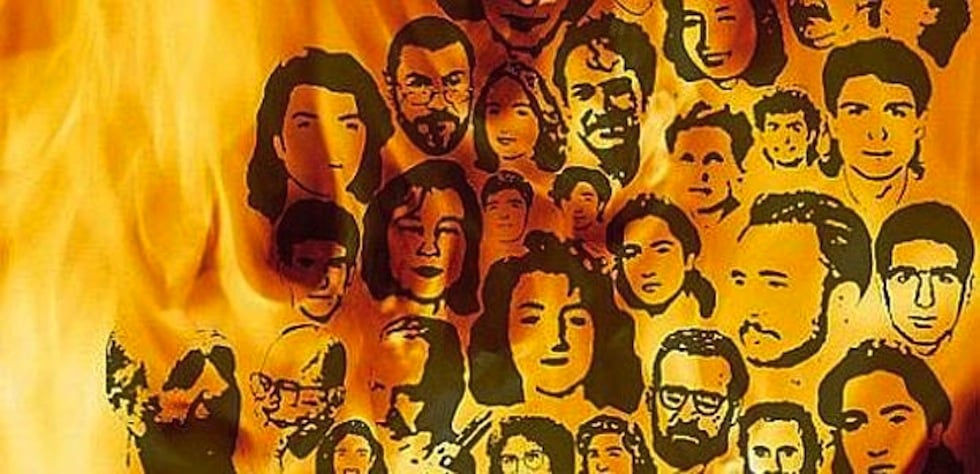
The Sivas Massacre of 2 July remains another open wound in my heart. Does the pain of it ever truly fade?
I was a child whose memory of Turkey was filled with beautiful moments. All I knew about my past and my roots was that we were from Sivas. It was never really possible to learn much about our heritage from families whose lives had been spent through centuries of exile and migration. I was thirteen. I was growing up in London, just beginning to discover our folk songs. I watched the film Pir Sultan. Can a person weep for days on end? I did. What was done to Pir Sultan, the betrayal of the Hızır Pashas, the roses thrown by friends—I carved them into my heart during those days. We were Alevi too. We weren't bad people. On the contrary, the goodness and humanity in my family were endless... Why did they want to kill us? I couldn't make sense of it. I was just a child. It didn't take long! In Sivas, they were burning people alive—our canlar, as we call them. We were watching it live on television. The state did absolutely nothing! I felt nothing but utter helplessness and fury. My inside was burning! Perhaps it was the very first time I experienced what true agony meant. And it was happening in a city thousands of miles away from the land where I was born.
Following the events, we organised a protest march with the Alevi Cultural Centre and members of the community who cared. We were going to stand tall and resist injustice and inequality, a legacy handed down to us from Pir Sultan. As we passed a mosque in the Stoke Newington area, a man with a beard and robes was smirking, mocking us. He was fearless. He looked human, but he was monstrous! For he had lost his conscience, his compassion, his humanity... I broke away from the march and walked straight up to him. No words can ever describe the rage I felt at that moment. On that day, with my crimson band on my head and a crimson flag in my heart, I saw and learned how I would walk through this life. My side was chosen.
"ISLAM OR DEATH!"
On 2 July 1993, the zealots rose up shouting this slogan; the perpetrators were clear, it belonged among those crimes where the guilty were known to all, yet years would pass and most of those arrested would be set free. The case would be dropped due to the statute of limitations; the pawns would be punished, while the real orchestrators walked the streets. In truth, it was the state itself that killed and allowed the killing. Those burned in Sivas that day, and the people who resisted in their wake, were trapped within the same circle of brutality created by that mentality. The state, which did nothing while our people burned, maintained the exact same attitude in the courtrooms, staring right into our eyes. Their side was chosen too.
"YES, WE BURNED THEM! AND WE WOULD DO IT AGAIN"
These very words were entered into the court records. The sounds of chants from outside, the threats of the crowd gathering in front of the Madımak Hotel, and the torching of the building were all captured on camera footage. The entire world, with Turkey leading the way, watched the Sivas Massacre live on television. No one did a single thing.
"FIRST THEY SHOUTED SLOGANS, THEN THEY RAINED STONES UPON US"
Halil Yalçıner is one of the witnesses of the Sivas Massacre. His admiration for Arif Sağ led him to the cultural centre that day rather than the hotel, and he dragged two of his friends along with him. That was how they made it out of Sivas alive. “Even if Aziz Nesin hadn't been there, they would have found another excuse and carried out this atrocity regardless,” he explains. After all, they weren't facing a crowd that had gathered on a whim; it was obvious they had organised specifically to commit this butchery.
"LOOK AFTER YOUR BROTHER, THEY ARE GOING TO KILL HIM"
Kamber Çakır, who lost his child Belkıs Çakır in the Sivas Massacre, fainted in the hotel and was rushed to hospital. A police officer on duty there turned to his brother, who looked like him, and said, "Look after your brother, they are going to kill him." The grieving father recalls that even in the hospital, they weren't safe after what had happened. He passed away at the age of fifty-nine from respiratory failure. Afterwards, his friends and family said, "In truth, he died that day in Sivas..."
They claimed Aziz Nesin provoked them. What kind of provocation could ever justify burning people alive? These excuses and deceptions can only satisfy a crowd that chooses to remain blind, deaf, and ignorant. The persecution faced by Alevis throughout history is recorded not in textbooks, but in the hearts of the Alevi people. They weren't hostile only to Alevis; they were hostile to art, to culture, and to humanity itself. We know these massacres were premeditated from what happened in Malatya, in Çorum, in Maraş—from every land we have been driven out of for centuries. We were ready "to share everything save the cheek of the beloved," yet we were ostracised, burned in massacres, broken, and exiled from our homes. When all we ever cared for, our entire faith, was love.
Since 2 July '93, the fire in our hearts has never gone out. Those at the helm of the state back then were no different from the authorities today. After Sivas, they continued to kill our youths, our children, and our mothers in different ways and under different guises. For years, governments have nurtured and fed the prisons, the merchants of religion, and political Islam. They have rotted and destroyed everything pertaining to human rights, completely forgetting that they too might one day need justice. Essentially, nothing has changed from that day to this; the faces inside the broken wheel have shifted, but the system has maintained its absolute malice.
"THE WORLD IS MY HOMELAND, AND HUMANITY MY KIN!"
You burned the very people who looked upon the world with these words embracing all of humanity. You burned those who performed the semah, who sang our folk songs, who embraced a brighter world. You burned the bards, the writers, the poets. They held no weapons in their hands; what made you so afraid of them?
I will never forget Sivas, and I will never let it be forgotten.
Comments
No comments yet. Be the first to comment.