
climatechange · World · globalisinma · globalwarming · iklimdegisikligi
September 3, 2019 · canan · 5 views
Our Planet is Under Threat!
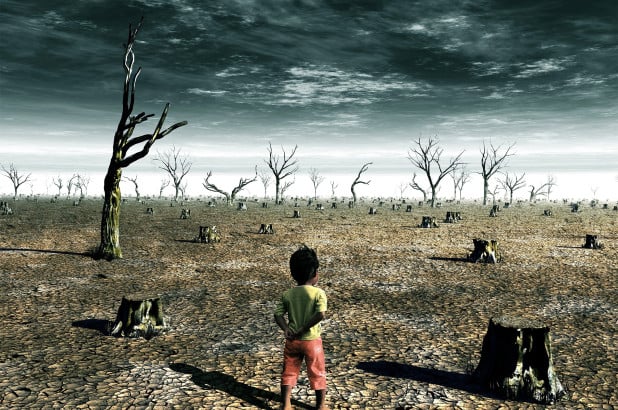
Children have been trying to tell adults something vital for a while now. They are protesting, writing on social media, striking from school; the question they ask is: "Why should we prepare for a future that does not exist?"
The children are right. Entangled day in and day out in politics within systems that have collapsed from every angle and no longer let us breathe, we completely ignore the true peril heading our way. It suits us to do so. Giving up our habits is hard, yet we must begin the change by realising that "nurturing life matters more than merely bringing it into the world," and leave children a planet where they can actually survive.
The world is warming and the climate is changing. In truth, these words have been on the tongues of certain institutions and individuals for a long time. Ever since experts began researching climate change, they have been declaring that the danger has escalated beyond imagination. So, what are we doing? How aware are we of this immense crisis? Are we striving to find a solution to this problem, from our individual daily routines to our collective social life?
We are probably completely oblivious even to the places directly affected by this grand peril, places that are already beginning to vanish. This awareness has not yet taken root within society. It is a bitter truth that although small gestures are made, we have not yet transitioned into major collective action.
In May, protests took place across 130 countries, led by a massive youth movement. These strikes began last year when Greta Thunberg skipped school to stand before the Swedish parliament, demanding harsher sanctions to reduce greenhouse gas emissions. Thunberg said:
"Politicians have known about climate change for decades. The responsibility they should have felt for our future, they willingly handed over to profiteers chasing fast money, at the cost of destroying our very future."
The cause of all this is humanity and boundless consumption. From the phones we use from morning till night to the lights we turn on, we consume fossil fuels; the carbon dioxide created by these fuels accumulates in the atmosphere like a heavy blanket, rapidly warming the earth. Sea levels are rising and oceans are heating up. Drought is threatening plants, wildlife, and freshwater sources. Scientists can no longer look away from climate change and the grand crises it brings in its wake. If things carry on like this, the world will soon endure massive catastrophes—catastrophes that have already begun to manifest as severe storms, floods, and heatwaves across various regions of the globe.
Sir David Attenborough’s BBC documentary Climate Change–The Facts caused a massive stir. Yet, the very next day, the vast majority of people carried on living without making a single change to their lives. This is the ultimate problem: we want a transformation without giving anything up. What needs to be done is to start with small adjustments and turn this rooted crisis into grand action. Otherwise, we are engineering the end of the world with our own hands...
Let us look further; the documentary explains that when coal, gas, and oil are burned—which we consume for energy in our homes and everywhere else—carbon dioxide is released. It reveals the fact that before the widespread use of coal fuel, carbon dioxide in the atmosphere stood at 280 parts per million, whereas nowadays it has soared to 400 parts per million. This increase is a terrifying figure. If we continue to live like this, it is certain that we will leave no bearable world for the generations to come.
There is no reversing total destruction. Due to the perils born from climate change, humans and wild animals face unprecedented challenges just to survive. Scientists state that we are facing a reality where eight per cent of other living species are under threat of total extinction. As the world warms, we will endure heatwaves, desertification, and droughts. This warming has already begun to wipe out the other species with whom we share this earth. For instance, in 2018, extreme temperatures in Australia led to the death of eleven thousand flying foxes; authorities managed to rescue only 350. This species was nearly wiped out, and if a few more heatwaves occur, it will vanish entirely. As our "needs" for energy sources used in almost every area of life heat the planet, other living beings perish and will continue to perish; as other species disappear, the balance will shatter, and in the end, major catastrophes will hit humanity too.
Glaciers are melting. The Greenland and Antarctic ice sheets have decreased in mass. Glaciers are retreating almost everywhere across the globe, including the Alps, the Himalayas, the Andes, the Rockies, Alaska, and Africa. Global sea levels rose by about eight inches in the last century. Both the extent and thickness of Arctic sea ice have rapidly declined over the past decade. Since the beginning of the Industrial Revolution, the acidity of surface ocean waters has increased by roughly thirty per cent. This increase stems directly from humans emitting more carbon dioxide into the atmosphere. The amount of carbon dioxide absorbed by the upper layer of the oceans is growing by about two billion tonnes every year.
An army of the starving... Africa is one of the regions that will be hardest hit. Global warming will cause immense droughts in Africa, and severe flood disasters will multiply. Life will be extinguished. This destruction by floods and storms also means the devastation of agriculture. Research indicates that torrential downpours will increase by seven to eight per cent compared to today's rates. In 2018, floods in the Tana River region of Kenya forced sixty thousand people to move from their homes.
According to data published by the UN Food and Agriculture Organisation, 815 million people live on the brink of starvation. The human race is estimated to reach ten billion by 2050; to feed an additional two billion, global food production must increase by fifty per cent. But how? In an era where poverty and hunger envelop the world with increasing intensity, and unmindful consumption multiplies rapidly, it stands as a glaring truth that this production will not be possible. Every year, an average of three million children die of starvation because they cannot find nourishment. Leading the nations devastated and affected by starvation are Haiti, Zambia, Yemen, Ethiopia, the Republic of Chad, and Sudan.
Scientists state that the sixth mass extinction is on its way, and we have only a single year left to take action. Furthermore, the UN warned that we have a mere twelve years left to avoid catastrophic climate change. Although these figures vary across certain news sources, the ultimate conclusion remains identical: the peril is now at our doorstep.
Over its four-and-a-half-billion-year history, the earth has endured five major extinctions, wiping out countless species. To ensure this does not happen again, we must work together and build eco-communities. Creating these new eco-communities will serve as a backup plan for humanity and civilisation, establishing a sustainable new lifestyle and means of livelihood. Giving up the lifestyles we are accustomed to is hard, but to avoid enduring and causing even greater catastrophes, we must change together. There is no solitary salvation! Either all of us together, or none of us!
Comments
No comments yet. Be the first to comment.