
Music
October 17, 2018 · canan · 4 views
The Era of Recording in Music...
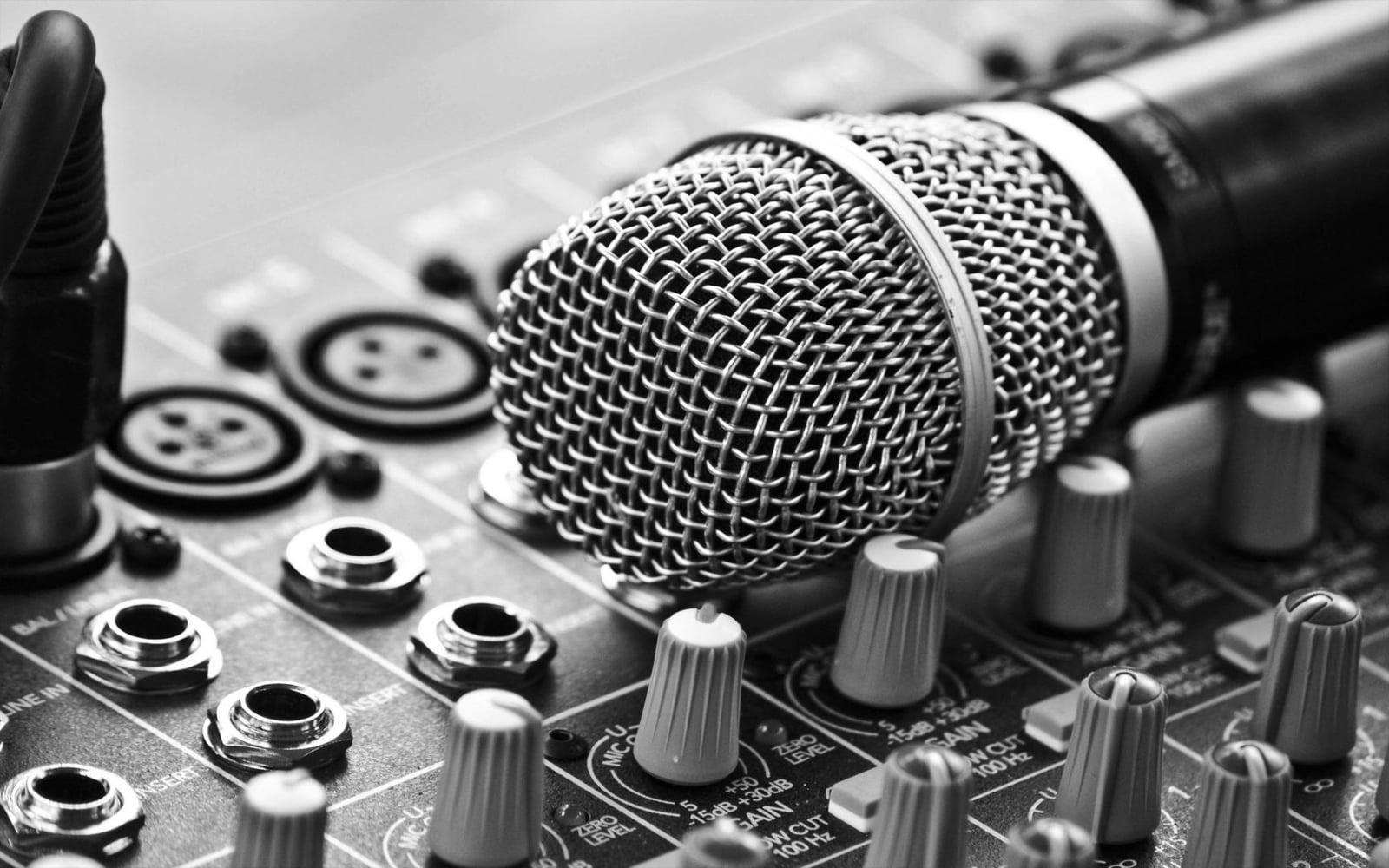
The twentieth century stood as an era where technology advanced at a frantic pace, developing in a manner that humanity struggled to keep up with. While children sat with phones in their hands, their adrenaline surging for hours as they moved from one game to the next, social media and internet use carved out a substantial space in the lives of adults as well. The examples are endless. Yet, let us look at how technology brought about the era of recorded music; in today’s world, music can be recorded anywhere from private homes to commercial studios. The fact that albums, cassettes, CDs, and vinyl records can now be played anywhere has also diminished the absolute necessity for live stage performance. The more anti-social we become, the better, it seems! As long as we don't mingle with one another and carry on without ever stepping foot outside our houses, perhaps everything will be finer! Who can say? Every imaginable path to alienate human from human has enveloped our world through smartphones and social media.
Let us return to our subject. Recording now constitutes practically the entirety of music. Naturally, the musical craftsmanship offered by recording equipment is undeniable—from musicians who record their gigs to review their flaws later, to those who achieve global stardom through album sales. Essentially, a recording presents sounds that have transcended physical presence, detached from the body. In other words, unless we were present during the tracking session, we cannot truly know how the recording was made; it could be live or heavily manufactured. This nuance can only be detected by musicologists or those deeply immersed in music. Indeed, a recording can never replicate the atmosphere or the raw joy of a live gig; only the experience lived in person remains etched in a human's memory. The tracking stage in music allows any given genre to resonate globally and find an audience, which is by no means a trivial matter. For instance, when listening to a tracking made in the early twentieth century, it can evoke emotions that feel much closer to that specific moment. However, as recording gear and techniques advanced, the sounds we hear grew more distant; someone is singing over there, we hear it, and we merely listen. Pink Floyd approached this from a different angle, utilizing environmental sounds in their albums The Wall and Animals, weaving everything from aeroplanes to animal noises into their arrangements. Another figure, Schaeffer, made his mark with works that recorded concrete sounds (musique concrète). In his 1948 composition Étude aux chemins de fer, he primarily tracked the sounds of trains. In this piece containing natural sounds, tempo and meter assert themselves, and dynamic expressions are utilized.
The early eras of tracking: In the 1920s, gramophone records began to spread rapidly. The earliest discs came in various sizes and speeds, tracking sessions that allowed three to four minutes of playback on each side. Later, in 1948, this duration extended up to twenty-five minutes per side, becoming the industry standard. Alongside the nostalgic charm of 78 rpm shellac records, it is argued that their superior sound fidelity remains unmatched by any modern recording system. Consequently, songs carry on living from the past to the present through old and new arrangements. For example, the song One For My Baby, famously performed by Frank Sinatra, can be heard years later by Robbie Williams with an entirely different backing track and vocal capture. Another instance is classical repertoire being performed by various musicians and presented to the public, granting the listener the right to choose their preferred interpreter based on the musician's nuances and individual style.
Let us look further... Cylinders and discs, the earliest methods of sound capture, are described as "acoustic". To transform a master recording from its original state into a marketable commercial product, the process known as "pressing" was introduced. With the advancement of digital technology in the 1980s, this process gave way to an entirely different era, creating social networks and digital platforms that would profoundly impact musicians and artists, forcing the music market to endure its share of an era driven by rapid consumption. While streams reach into the millions, artists find themselves unable to sell even a thousand physical CDs, forcing them to work secondary jobs for extra income simply to reinvest their earnings into their music.
The earliest sound recording mechanism was invented for commercial use by Thomas Edison in 1877. Edison’s phonograph tracked sound onto a wax cylinder roughly five to six inches long, utilizing a stylus to cut vertical indentations. Consequently, numerous companies purchased equipment patented by Edison, and the phonograph and gramophone industry expanded rapidly across America, Britain, and Europe. By the 1900s and with the outbreak of the First World War, recording devices were making a name for themselves, outstripping the sales figures of countless other commercial commodities.
The present day: Yet, look at the digital age and what it has wrought! As is well known, tracking and its technicalities constitute a highly professional trade in their own right; a tracking session only begins after the sound engineer and the musical director have calibrated the equipment down to the finest detail. The engineer or producer communicates with the musician, assisting them with everything from putting them at ease to advising on delivery and performance techniques. Although traditional producers are a rarity nowadays, that was how it used to be; capturing clean, flawless audio was paramount. There is a massive gulf between the infancy of the recording process and where it stands today; audio engineering has established itself as a formal profession, with educational tracks extending from secondary schools to universities.
Alongside recording, boundaries were erected, particularly within popular music. Beyond the constraints of the AABA form and traditional thirty-two-bar structures, songs began to be accepted by the public strictly as standardized commodities (Adorno, 1990). For Adorno, recording signifies the commodification of music. He argues that it becomes something strictly to be bought and sold, and consequently, he faces criticism for his biting perspective. Yet, his sharp language only reinforces his accuracy. From another perspective, musicians have utilized tracking to record themselves, reviewing the playbacks to develop intricate solos over them. In this manner, they managed to create fresh material to display during their next live performances. We can observe another example with Les Paul and Mary Ford; while a pre-recorded backing track plays on the device for a live performance, the guitarist can play over it and the vocalist sings along. Furthermore, vocal layers and harmony tracks can find their place within the recording itself.
One must not overlook the musical labourers who contribute throughout a recording session; the vocalists, producers, arrangers, engineers, and the studio hands—the list carries on endlessly. Although a flawless audio capture is presented to the listener, the sheer effort behind the scenes is immense; we cannot pass over this without recognition. Indeed, while on one hand recording technology offers the listener the opportunity to hear music from bygone eras, on the other hand, it reduces employment opportunities for musicians and threatens to thoroughly commodify music by making it purely downloadable.
Comments
No comments yet. Be the first to comment.