
World
October 14, 2018 · canan · 6 views
Those Cultivated by Consumption!
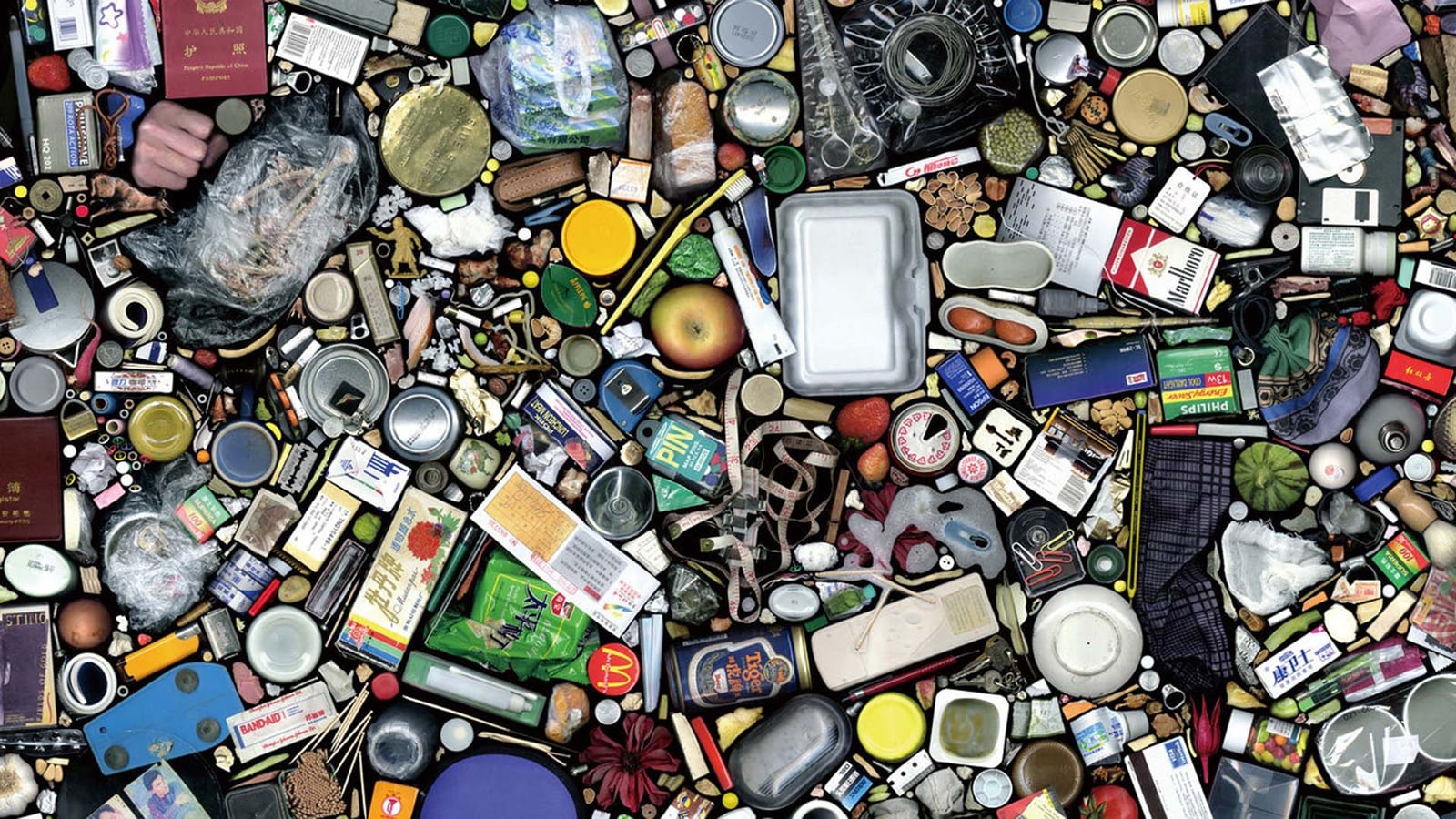
In the national economies of the world, 'consumption' has gained central importance, and in the current age of 'globalisation', the impacts of a consumption-focused economy have begun to dictate the entire globe. The political and economic system, entirely concentrated on increasing consumption, causes more poverty and exploitation with every passing day.
One should not merely dismiss 'consumption'. With the current speed of our consumption, our environment is perishing in a not-so-distant future, while poverty across the world is rising; as immense wealth accumulates in the hands of a tiny minority, starvation spreads, and indirectly, it breeds an equal measure of social and ecological crises.
Consumption is as much an individual matter as it is societal. In terms of receiving social acceptance, people have naturally placed importance on their outward appearance throughout every period of history. Every era has had varying criteria for 'image', 'brand', 'logo', and even for how we influence one another. We are speaking of differing criteria for taste determined by the culture of the period. The self is the only thing we possess. How we perceive and display this, however, has constantly shifted depending on the individual and the prevailing culture.
There is no human being today who is not seduced by the world of consumption; it is impossible to completely reject the lifestyle imposed by consumption. According to sociologists, a person who feels a constant need to buy things is likely hiding behind consumption to cover up a perceived deficiency in themselves or to mask the lack of the appearance they wish to achieve (that is, to feel complete). This manifests in men more through the purchase of electronic goods, whereas women gravitate toward skincare, clothing, and jewellery products.
BECOMING A CREATURE! The consumer is confronted with new inventions every single day. Outward appearance has reached such a state that barely any 'natural' humans remain. By unnatural, I don't merely mean being made-up—we can tolerate that—but the crowd that alters every part of themselves, from nose and body aesthetics to artificial eyebrows and eyelashes, is becoming more numerous with every passing day. Naturally, I have no criticism for aesthetic surgeries performed due to health issues, accidents, or trauma; however, as the state of the world drags itself toward the worse, I believe it is vital to understand the things with which they are deceiving us. Let us recall the examples of those who, in the name of 'aesthetics', have turned into 'creatures'; that should be enough...
They also invented a side of consumption meant to soothe the conscience. Products on 'online' shopping sites are presented using figures of smiling men and women. Life is just so beautiful for everyone, right!.. Still not working? Then, so that shoppers can feel more at ease in their conscience, it is announced—accompanied by photographs of impoverished black people—that a portion of the money they pay will be distributed as donations. Social responsibility!.. Where those donations actually go remains ambiguous! If the skeptical consumer cannot be fooled by donation psychology, they are steered toward the gift-wrapping alternative, and their feeling of wellbeing is ensured one way or another. How long this state of mind lasts, well, that's not clear at all.
EAT, MY FUR, EAT! Historically speaking, the attire of the well-off has always been 'proper' and showy in every period. Styles of dress have reflected people's class affiliations. The story of "Eat, my fur, eat!"... For instance, if a person wears a suit today, they are 'respectable'! Yet, we all know what kind of villainy many suit-wearers engage in to don that attire, but very few of us can ever bring ourselves to say it. Most of us carry on acting as if the person before us is 'respectable'.
Consumption undoubtedly carries a class-based nature. Within the consumer madness of the 21st Century, the impoverished and the labourers wear the same item a thousand times over; even those garments are passed down to younger siblings. For the wealthy, this is the exact opposite; they fill their wardrobes with new clothes every season, and some don't even wear what they've worn once.
The American sociologist Thorstein Veblen examines the habits of the wealthy in his book, The Theory of the Leisure Class. In conclusion, he arrives at two motives: obtaining a positive impression and raising one's status within society. Being wealthy is not enough to enter the world of the rich; one must be ostentatious. In this research, Veblen further specifies that, particularly for the nouveau riche to enter the circle of the wealthy, they must signal this through expensive items and attire.
Is the state of the middle class not exactly the same? The 'new middle class' performs the function of bringing grist to the mill of capitalism most beautifully. They are the 'stylish' servants of capital, producing as white-collar workers and then purchasing what they produced all over again...
The 'contemporary consumer' is concerned more with form than content in order to express themselves, and is constantly buying new products. When fashion changes, it is necessary to replace the old with the new. Credit cards, debts incurred from them, and the catastrophes lived in their pursuit are largely the 'subjects' of the contemporary consumer. My neighbour has it, I don't! It isn't even about hunger or satiation; it's about clothing, furniture, etc…
SHOPPING PRISONS: As you know, hundreds of Shopping Malls (AVMs) have been established in major cities. From drinking coffee to merely browsing, the vast majority now head there. Frankly, I could never like them. I go only when I have to; I get dizzy, I can't endure it for long, and I am forced to leave. I don't know if it's the lights or the excessive crowds, but we didn't take to each other! (Doesn't that artificiality, the inability to even feel the season outside, turn a person into a consumption machine? Isn't that so? Is there any difference between summer and winter inside a mall?)
'Atmosphere and ambience' carry great significance in such places. Retailers and marketing experts have become increasingly aware of the subtle cues embedded in products and retail environments. They know how to influence the consumer; in short, they know their trade. If you step through that door, you aren't leaving empty-handed! From the upbeat tempo of the music playing in the shops, meticulous calculations are made to pin the consumer into a vice. For instance, it is impossible to hear a sad song; it is always energetic, always in "hands in the air" mode!
BUT WHAT ABOUT ‘US’?: In truth, there was only one issue I wanted to connect to when writing this piece: Solidarity... If we think ten times before helping a person in need while passing through such a time when mad shopping never ends, or if we even refuse to help with a pittance, that is the bitter truth of how the system has imprisoned us as it desires. I am one of those who believes that small acts of mutual aid sow grand hopes. Everyone says, "the world turns for the sake of good people"... Well then... where do those beautiful people go during many solidarity events or charity campaigns? If only we could give up mad shopping and consume only what we need, and instead of acquiring dozens of shoes, clothes, jewellery, etc... if only we could turn the love within us into a spirit of solidarity, and hasten the days when we increase production instead of consumption?.. Otherwise, as scientists have recently stated, the world won't even be left for the children; it will perish. I still have hope. Together, we can ensure we see 'beautiful days', we will. What is 'being human' if not being hopeful and thinking of others?
Comments
No comments yet. Be the first to comment.