
Women
October 14, 2018 · canan · 4 views
Another 'Marx' Little Known to the World
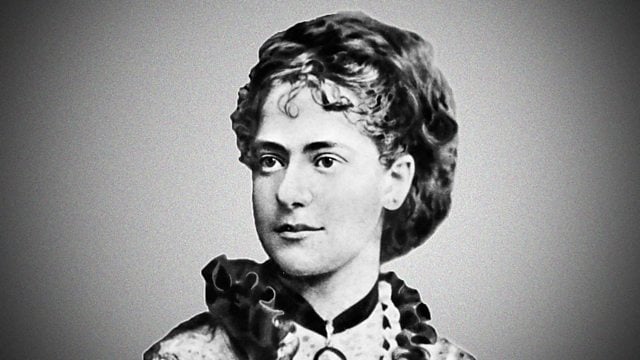
The women's crisis manifests before us every single day as a steadily expanding wound, enveloping the entire world like a spider's web, and hurting more intensely the deeper one dives into it. Despite strengthening their organizational efforts in major cities, women still occupy the front ranks of the most oppressed within a system rotten from head to toe. When we observe this trajectory stretching from Europe to the Middle East, we encounter honour killings, female genital mutilation, forced marriage, sexual abuse, rape, violence... an endless catalogue of crises. In this piece, rather than merely focusing on female oppression, I will attempt to articulate the story of a woman who rebelled against this tyranny and viewed the women's struggle as an integral whole within socialism. Though she was once the closest aide to a man who etched his name into a grand movement in global socialist history, influencing millions with the ideal of international revolution and socialism, her name is rarely mentioned today: Eleanor Marx, the fourth child of Karl Marx...
At an early age, Eleanor had already demonstrated her sensitivity toward the oppressed and class division. She was a child far more perceptive than her peers. One of the six children born to Karl and Jenny Marx, everyone called her Tussy from her infancy. As her father's favourite and the one who would dedicate her life to keeping his ideas alive, Tussy loved playing chess with him and adored listening to his stories. Long before embarking on a lifetime as an active militant within the international working-class movement, she began working as Karl Marx's secretary at the age of sixteen, accompanying him to international socialist conferences. The author John Simkin notes in an essay on Tussy that she was memorising passages from Shakespeare when she was a mere three years old. Alongside English, Karl Marx could converse with his daughter fluent in both German and French.
In 1884, she became one of the founders of the Socialist League. She extended her support by establishing trade unions for individuals lacking formal trades or education. Upon reaching young womanhood, she transcended simply being her father's daughter, becoming an organic part of the working-class movement that walked in his footsteps.
In 1876, she took an active role in campaigns for women's equality and secured a seat on the London School Board. In 1885, she organised the International Socialist Congress in Paris, and a year later, toured America to raise funds for the Social Democratic Party of Germany. Wishing to claim her independence at the age of eighteen, Tussy moved in with friends in Brighton, sustaining herself by offering private tuitions.
The most prominent industrial actions Tussy engaged in were 'Black Monday' and the 'Matchgirls' Strike'. The London matchgirls' strike of 1888 was initiated by workers at the Bryant & May factory in Bow, London. The strike, launched against wretched working conditions, meager wages, and the severe health crises caused by working with white phosphorus, was triggered by the dismissal of a single worker. On the first day of the strike, 1,400 individuals refused to work; and although management immediately reinstated the dismissed worker, the female labourers were no longer willing to accept starvation wages. Failing to reach an agreement with the employers, the workers ground the factory to an absolute halt a few days later. They subsequently met with Annie Besant (the English socialist and women's rights activist); a strike support campaign was launched, and certain newspapers gathered donations. Following negotiations with Members of Parliament, an agreement was reached to reverse unfair wage deductions and allow workers to eat their meals in a separate room free from phosphorus, bringing the strike to a successful conclusion.
Following the 'London Matchgirls' strike, the London Dock Strike broke out in 1889, and Eleanor once again participated actively in the process. The strike began as a result of a labour dispute, culminating in a triumph forged by a hundred thousand strikers. To this day, this strike is evaluated as a major turning point for the British labour movement. It was this strike that drew the greatest attention to the poverty of Victorian England, earning the dockers the sympathy and support of the public. The grievance of the dockers, whose hourly wage stood at a mere sixpence in those years, was their low pay. The onset of the strike emerged following disputes over "plus" bonus payments. The 1889 dockers' strike brought together thousands of unorganised and unskilled workers, fundamentally strengthening the trade union movement. That same year, Eleanor travelled to Paris with Engels, where they co-founded the Second International. In his twilight years, Engels was both Eleanor's mentor and the closest confidant with whom she shared her life and work. Indeed, before his passing, Karl Marx entrusted the incomplete manuscripts and the English version of his definitive masterpiece, Das Kapital, to Tussy's care.
Tussy lost her mother in 1881, her older sister Jenny in 1883, and her father just a few months later. Faced with these successive, devastating losses, she succumbed to anorexia, losing an extreme amount of weight. Following this immense grief, her profound love for Shakespearean theatre led to her crossing paths with Edward Aveling. After meeting Edward in 1883, she lived with him for the rest of her days under a common-law arrangement. Although both delivered speeches at the socialist meetings they attended, Eleanor remained the true driving force behind the scenes. Eleanor and Edward became members of the Democratic Federation led by Henry Hyndman. The Democratic Federation subsequently changed its name to the Social Democratic Federation, before dissolving in 1884 due to personal frictions and debates surrounding internationalism. Eleanor penned several articles for Commonweal, the monthly journal issued by the Socialist League—which she had established alongside Aveling and William Morris—bringing the women's struggle directly to the fore.
In 1886, in a review she co-authored with Aveling on the German socialist August Bebel's volume Woman in the Past, Present and Future, she summarized that the fundamental crisis was anchored to economics, emphasizing her advocacy for absolute societal transformation. Furthermore, she noted that the majority who set themselves up as advocates for women remained indifferent to the broader evolution of society, evaluating the issue almost exclusively through the lens of upper-class women. She asserted that her own perspective would champion all women without exception. In doing so, she stressed that although matters such as contagious diseases (which in those years were linked to sexual ailments), property ownership, and suffrage were debated, woman was oppressed in the exact same manner as the working class, enduring the most ruthless degradations—and underlined that the unique remedy lay in a grand societal restructuring.
In 1891, she and Aveling published a pamphlet entitled The Factory Hell. Drawing attention at the outset to the legislation and reports drafted in favour of workers' rights, they emphasised that regardless of what laws or surveys were introduced, one was invariably met with the exact same sorrowful and painful narrative. Discussing the violation of laws, labourers working within unsanitary sweatshops, contracting infectious diseases, and the insatiable greed of employers, they pointed out that the situation was entirely unchanged from fifty years prior. Placing substantial importance on sanitation laws, Eleanor noted that inspectors lacked proper authority across 724 audits, and that out of 1,111 workshops examined, 907 required urgent hygienic improvements. A rampant example was that in almost all workplaces, the taps for drinking water were located inside the lavatories.
Though Tussy achieved monumental success in the struggles she waged on behalf of the labour movement and socialism, she tragically failed to maintain the same resilient stance in her private life. In 1898, succumbing to severe depression, she took her own life at the age of forty-three.
Comments
No comments yet. Be the first to comment.