
World
October 14, 2018 · canan · 2 views
Humanity and Destruction / For Hasan Polat…
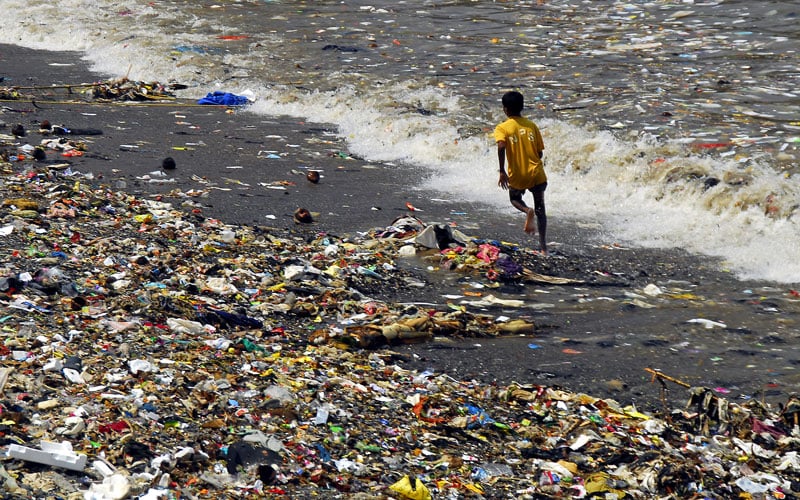
The Earth is the third planet from the Sun. According to radiometric dating and other sources, it was formed four and a half billion years ago. On this planet, from dinosaurs to pyramids, from reptiles to humans, we have left our traces spanning somewhere between fifty-five to sixty-five million years. I will not delve into the history of the world in this piece. Since it is impossible to fit such a vast subject into a daily essay, I will simply try to articulate the destruction we inflict upon the earth as human beings, and the perils awaiting us and all living creatures in the coming century.
Anatomically, the earliest fossils of modern humans date back roughly two hundred thousand years to the Middle Paleolithic period. Spreading across the globe from Africa, the human species took its first steps toward modern behavioral patterns fifty thousand years ago. That being said, in 2017, Prof. Jean-Jacques Hublin from the Max Planck Institute for Evolutionary Anthropology (MPI) in Germany announced that data from fossil remains discovered in the Jebel Irhoud region of Morocco could push human history even further back. But that is an entirely different matter! Research is still ongoing.
So, what kind of damage has the human species inflicted upon the world over this span of time? Tragically, immense damage! It is impossible to contain this destruction within a single piece of writing. Although the human population has multiplied to reach seven point six billion, we represent a mere zero point zero one per cent of all living beings on this planet. Yet, when it comes to causing destruction, no one can match us! No other living species can keep pace with our speed in this regard.
In May 2018, The Guardian reported that "since the dawn of civilisation, humanity has caused the loss of eighty-three per cent of all wild mammals and half of all plants." The report continues: "The destruction of wild habitats for farming, forestry, and development has triggered the onset of what many scientists consider a sixth mass extinction event in the Earth's four-billion-year history. It is thought that roughly half of the world's animals have vanished in the last fifty years alone."
The world is no longer a safe place—perhaps it never truly was. We live face-to-face with economic crises, political exploitation, class struggles, starvation, unemployment, racketeering, theft, and countless other crises. Neither trust nor safety remains. While the kind of world we are leaving behind for our children is painfully clear, we must realise that an even greater peril awaits the planet.
Nuclear Weapons: The catastrophic damage nuclear weapons inflict upon humanity, nature, and our future is beyond measure. In human history, nuclear weapons have been deployed in conflict only twice: at Hiroshima and Nagasaki. In Hiroshima and Nagasaki, one hundred and twenty thousand people perished. Tragically, humanity did not stop after those wars; instead, we manufactured even more potent nuclear weapons. These newly developed armaments have never been deployed in conflict to this day. Should such a situation arise and nuclear weapons be used, it would mean the immediate or subsequent death of hundreds of millions of people.
Cities and Crowds: In 1950, fewer than seven hundred and fifty million people resided in urban areas. Today, this figure stands at four billion—more than half of the global population. According to data provided by scientists, roughly six point three billion people will inhabit cities toward the end of the century. This congestion will bring a multitude of crises in its wake. Already, right in the "heart" of Europe, food banks have been established for people unable to meet their daily nutritional needs. Compared to rural areas, cities consume three-quarters of the world's energy and generate an equivalent share of global carbon emissions. Consequently, population growth will drive up energy demands and breed further pollution. The ultimate result: breathing toxic air. Along with this, the proliferation of diseases will become inevitable.
Water Scarcity: Today, one point one billion people endure water scarcity. Furthermore, two point five billion people—thirty-six per cent of the global population—reside in water-stressed regions. Forty per cent of the world's population faces water shortage for at least one month a year, either due to a lack of supply or a lack of financial means. By the middle of this century, this crisis will escalate significantly. Billions of people will suffer from water scarcity. It is heavily emphasised that the Middle East and North Africa in particular will face outright famine. Currently, one-third of the world's rivers—and the groundwater that sustains roughly three billion people—is either depleted or rapidly vanishing.
Experts state that the global population will rise to eight point six billion by 2030, nine point eight billion by 2050, and eleven point two billion by 2100. Research conducted so far demonstrates that as the population grows, economic income dwindles, leaving people struggling immensely to satisfy their basic needs. Though we may grieve for the times we live in, it is obvious that these are our better days. In short, humanity continues to multiply by destroying, and this expansion brings with it crises we will be utterly powerless to overcome in the years ahead.
Climate Change: In recent years, we have begun to feel the effects of climate change acutely. To the extent that countries known for rain are witnessing temperatures above thirty degrees, while lands accustomed to forty-degree heat are spending their summer months in the low twenties. Scientists have declared that we will experience this shift even more intensely in the coming years. The world is warming. Ice is melting globally. Due to rising temperatures, numerous living beings are severely affected; we are even encountering species whose numbers are dwindling rapidly. Over the last century, sea levels have begun to rise at a rapid pace. It appears that by the end of this century, sea levels are expected to rise by eighteen to fifty-nine centimetres. And that is by no means all! Catastrophes and natural disasters affecting every single species will swiftly become a part of daily life; hurricanes and storms will multiply, floods and droughts will become widespread, finding clean water will grow difficult, and certain infectious diseases will proliferate.
Our esteemed poet Orhan Veli once wrote: "Beni bu güzel havalar mahvetti" (This beautiful weather has been my ruin). Yet we have ruined the very beautiful weather that ruined our poet; we have disrupted the climate itself. If only our loss were merely a mundane civil service post! Harmful rays have scorched our skin and given us cancer. We chopped down the forests and became a desert! We released heavy metals from chimneys; they turned to acid, rained down upon us, poisoned our soil, and we became a bundle of toxins! We erected concrete structures in riverbeds; even our friend the rain turned into an enemy, and we became a flood! We were shattered by hurricanes and became the wind! And we consumed endlessly, wallowed in vanity, established toxic mining sites—gold, diamonds, rubies, and silver were our ornaments; we devoured whatever was set before us, remaining insatiable even with caviar and oysters! Meanwhile, some of us were drained by the insatiable, and became the starving! In short, as you can see, my friends, we became everything in this deceptive world. We became cancer; we became a bundle of toxins; we became a desert; we became a flood; we became the wind; we became a sinkhole; we became insatiable; we became the starved! Only a single question remains: did we manage to become human enough to protect our beautiful nature, which is a legacy entrusted to us for generations to come?
Comments
No comments yet. Be the first to comment.